Dental bridge vs. implant is not a contest with a single universal winner. A bridge uses neighbouring teeth to support a fixed replacement tooth, while an implant places a support in the jawbone for a crown. The better choice depends on the condition of nearby teeth, available bone, health history, treatment time, budget, and maintenance preferences.
Key Takeaways
- The best option is the one that fits your teeth, gums, bone, health, timeline, cleaning routine, and the full treatment estimate.
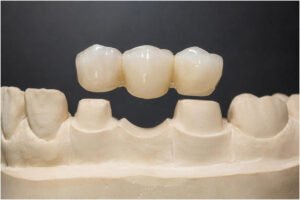
- A conventional bridge replaces a missing tooth by connecting it to crowned teeth beside the gap.
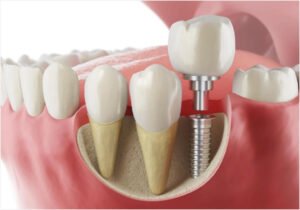
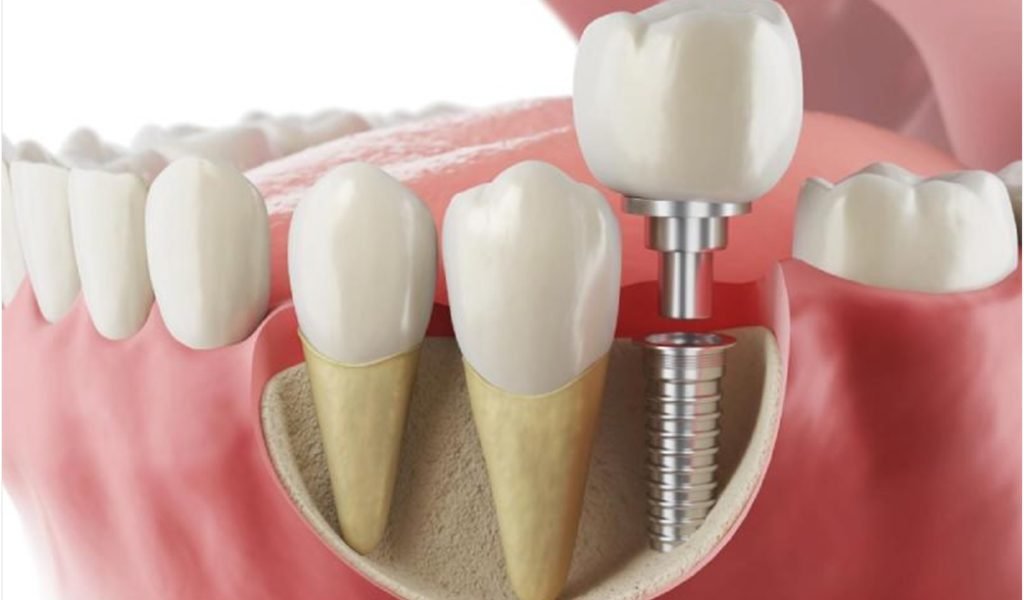
- A single-tooth implant replaces the root with an implant fixture and supports a separate crown.
- A bridge usually avoids implant surgery, while an implant avoids reshaping healthy neighbouring teeth.
- Implant treatment commonly has more stages because the implant must integrate with bone before the final crown is placed.
How a Dental Bridge vs. Implant Replaces a Missing Tooth
A dental bridge and a dental implant both fill a gap with a fixed replacement tooth, but they receive support in different ways. A conventional bridge refers to an artificial tooth joined to crowns on the teeth beside the gap. A single-tooth implant refers to an implant fixture placed in the jawbone, an abutment connector, and a crown attached above it.
The American College of Prosthodontists explains that a fixed bridge typically involves preparing the teeth on both sides of the gap for crowns, then cementing the bridge in place. Its dental implant guidance describes an implant as a titanium fixture placed in bone, followed by an abutment and artificial tooth after integration.
At Just Dentistry, both dental bridges in London and dental implants in London begin with a full assessment. The goal is not to push the newest option. It is to understand the gap, the surrounding teeth, your bite, your gum health, and what will be realistic to maintain.
Dental Bridge vs. Implant: A Quick Comparison
| Decision Factor | Dental Bridge | Dental Implant |
|---|---|---|
| Main support | Natural teeth beside the gap | Implant fixture in the jawbone |
| Neighbouring teeth | Often prepared for crowns in a conventional bridge | Usually left unaltered |
| Surgery | Usually no implant surgery | Requires implant placement surgery |
| Treatment sequence | Preparation, records or scan, temporary if needed, final bridge | Planning, implant placement, healing or integration, abutment and crown |
| Bone requirement | Focuses on the strength and health of supporting teeth | Requires enough suitable bone or a grafting plan |
| Daily cleaning | Requires cleaning under the connected replacement tooth | Requires cleaning around the implant crown and gumline |
What Happens to the Neighbouring Teeth With Each Choice
Start with the teeth beside the gap. A conventional bridge usually requires them to be reduced for crowns. That may be reasonable if they already need large restorations, but it is a bigger trade-off when both teeth are healthy and untouched.
A single implant stands independently, so it usually avoids altering the neighbouring teeth. It still requires adequate bone and healthy tissue, and your medical history, habits, bite forces, and ability to heal all matter.
Dental Bridge vs. Implant: Durability and Bone Health
Both options can last for many years when they are well planned and maintained. A bridge depends on healthy supporting teeth and on cleaning beneath the false tooth. An implant depends on stable integration, healthy gum and bone, and control of risks such as smoking, gum disease, or heavy grinding.
Bone health affects the decision differently. An implant requires sufficient suitable bone, and limited volume may lead to grafting or a different plan. A conventional bridge does not require an implant site, so the focus shifts to supporting teeth, the ridge, the bite, and cleaning.
Implants often have greater long-term potential, but no implant, crown, bridge, or supporting tooth is guaranteed for life. The American College of Prosthodontists links implant success to diagnosis, planning, health history, home care, and professional maintenance. A bridge can also be durable in the right situation.
Comparing Treatment Time and Number of Appointments
A conventional bridge is usually the faster option because it does not require waiting for an implant to integrate with bone. The typical sequence includes assessment, preparation of the supporting teeth, a scan or impression, a temporary restoration when needed, and placement of the final bridge after the laboratory phase. The exact number of visits depends on the design and whether the supporting teeth require additional care first.
An implant usually involves more stages. Planning may include three-dimensional imaging; surgery places the implant; healing allows integration; and later visits connect the abutment and crown. If the site requires extraction, healing, bone grafting, gum treatment, or referral, the timeline can be longer. Some cases can combine steps, but a shorter protocol is not suitable for everyone.
Which Option Tends to Suit Which Type of Patient?
A bridge may be suitable for someone who wants a fixed replacement without implant surgery, has strong supporting teeth, or already needs crowns on the teeth adjacent to the gap. It may also be considered when bone, health, medication, timing, or personal preference makes implant treatment less suitable. The supporting teeth and gums must still be stable enough to support the bridge.
An implant may suit an adult who wants an independent replacement, has suitable bone and healthy tissues, can complete the surgical and healing stages, and is comfortable with the maintenance commitment. Grafting may expand the options when bone is limited, but it also adds treatment, cost, and healing considerations.
Compare complete plans, not just procedure names. Our restorative dentistry services include bridges and implants, so the discussion can begin with your needs. We explain what changes, what stays the same, and what each option takes to maintain.
Cost should be compared the same way. An implant is not always more expensive than a bridge, and a simple headline price can exclude grafting, temporary teeth, laboratory work, follow-up, or future maintenance. Review an itemized estimate and ask how benefits or payment options apply. Just Dentistry outlines its approach on the financial arrangements page.
Conclusion
A dental bridge can be the sensible choice when the neighbouring teeth are good supports, and you want a fixed solution without implant surgery. An implant can be the sensible choice when you want an independent replacement and your bone, tissues, health history, and timeline support it. The right answer comes from a careful examination, not a generic ranking.
At Just Dentistry, caring for family means explaining the trade-offs in plain language. You should leave knowing why a recommendation fits your mouth, what it takes to maintain it, and which alternatives remain available.
To compare a bridge and an implant for one missing tooth in London, Ontario, book your family’s next visit.
Frequently Asked Questions
Is a dental implant more expensive than a bridge upfront?
It can be, but not always. Implant costs vary with surgery, imaging, grafting, the abutment, the crown, and coverage, while bridge costs vary with the number of units and the condition of the supporting teeth. The American College of Prosthodontists notes that a single implant can be similar in cost to a fixed bridge in some cases. Compare complete, itemized plans.
Does a bridge require healthy teeth on either side of the gap?
A conventional bridge typically requires teeth on both sides that can be prepared and relied on for support. Those teeth should have acceptable structural and gum health. Other bridge designs may use different support, so ask which design is being proposed and why the supporting teeth are considered suitable.
Which option tends to last longer with proper care?
An implant often has greater long-term potential because it does not rely on crowned neighbouring teeth, but neither option has a guaranteed lifespan. Bridge performance depends on the supporting teeth and on cleaning beneath the replacement tooth. Implant performance depends on bone integration, gum health, bite forces, home care, and regular professional maintenance.
Can a bridge be replaced with an implant later on?
Often, yes, but it requires a new assessment. The dentist must evaluate the space, bone volume, gum health, bite, and the condition of the previously supporting teeth. Bone grafting or other treatment may be needed, and the final plan may differ from what was possible when the tooth was first lost.