Dental bridges are fixed restorations that replace one or more missing teeth by anchoring an artificial tooth to healthy neighbouring teeth or dental implants. They can help restore chewing and speech while giving your smile a more complete look, but the right design depends on your oral health, the location of the gap, and your goals.
Key Takeaways
- A dental bridge is fixed in place; only a dental professional can remove it.
- The four common designs are traditional, cantilever, Maryland, and implant-supported bridges.
- Traditional bridges usually require reshaping the supporting teeth to place crowns.
- Daily cleaning under the bridge and regular dental visits help protect the bridge and supporting teeth.
- A bridge-versus-implant decision depends on your oral health, the supporting teeth, bone, timeline, and preferences.
What Dental Bridges Are and How They Fit in Your Mouth
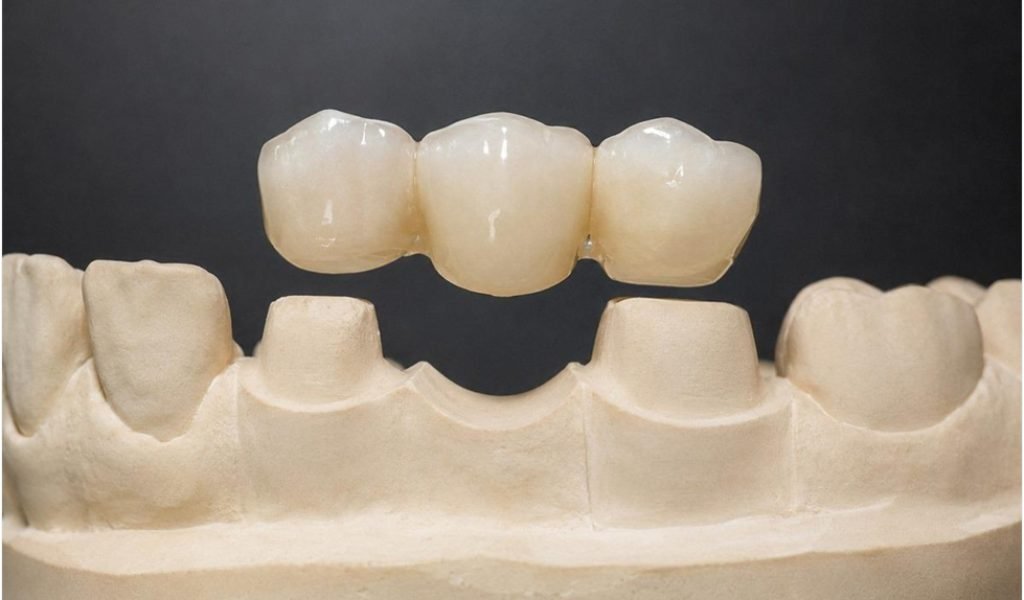
A dental bridge refers to a fixed prosthetic restoration that fills a gap with one or more artificial teeth, called pontics, supported by natural teeth or implants. The American College of Prosthodontists explains that a fixed bridge is cemented to prepared supporting teeth, so you do not remove it at home.
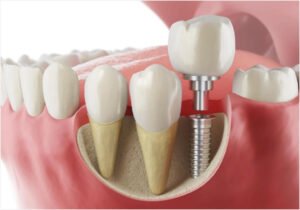
The supporting teeth or implant connectors are called abutments. Together, the pontic and abutments form a stable unit that spans the open space. A well-planned bridge can improve how you chew and speak, help distribute biting forces and give the smile a more continuous appearance. It does not replace the missing tooth root itself unless implants are used for support — only an implant acts as an artificial tooth root, as the American Dental Association’s patient glossary explains.
A dentist must first assess the health of your gums, the strength and position of nearby teeth, your bite and the size of the gap. At Just Dentistry, that assessment is part of our broader restorative dentistry options, so the recommendation can be based on the whole mouth rather than the missing tooth alone. That is part of our whole-body, not-just-teeth approach.
The Common Types of Dental Bridges
There are four common bridge designs, and each uses a different form of support. Cleveland Clinic’s medically reviewed dental bridge guide describes traditional, cantilever, Maryland and implant-supported bridges.
- Traditional bridge: Crowns are placed on healthy teeth at both ends of the gap, with a pontic between them. This design is commonly considered when strong teeth are present on both sides.
- Cantilever bridge: The pontic is supported from one side only. Because it has less support, it is not suitable for every location or bite.
- Maryland bridge: Thin wings are bonded to the backs of adjacent teeth. It is often used at the front of the mouth, where chewing forces are generally lower.
- Implant-supported bridge: Dental implants support the bridge rather than natural teeth. This may be considered for several missing teeth in a row or when suitable natural support is unavailable.
The names can sound technical, but the choice is practical: which teeth or implants can safely support the replacement, and which design suits the location and forces in your bite? Your dentist should explain why a specific option is being recommended, what it requires from the supporting teeth and what alternatives are available.
How Dental Bridge Placement Works, Step by Step
For a traditional bridge, treatment typically requires more than one appointment. The exact plan can vary, especially for Maryland or implant-supported designs, but the usual sequence is straightforward:
- Examination and planning: your dentist assesses the gap, supporting teeth, gums and bite, and may use X-rays or digital scans.
- Comfort and preparation: local anaesthetic is used. For a traditional bridge, a small amount of enamel is removed from the abutment teeth so crowns can fit; this step is irreversible.
- Impressions or scans: a detailed record is sent to a dental laboratory or used in a digital workflow to make the bridge.
- Temporary protection: a temporary bridge may protect the prepared teeth while the final restoration is made.
- Fit and placement: the temporary is removed, the final bridge is checked for fit, contact, and bite, and then cemented or otherwise secured.
Implant-supported bridges follow a different timeline because the implants must be placed and allowed to integrate with the jawbone before the final bridge is attached. Your dentist should outline the visits, healing time and expected costs before treatment begins, so you can decide without pressure or surprises.
Caring for a Dental Bridge So It Lasts
A bridge requires the same daily attention as natural teeth, plus cleaning beneath the pontic. Plaque can accumulate along the gumline and around supporting teeth, so the goal is to keep every margin and hidden surface clean.
- Brush twice daily with a soft-bristled toothbrush and fluoride toothpaste, as recommended by the Canadian Dental Association.
- Clean under the bridge every day with a floss threader, super floss, an interdental brush, or another tool recommended for your mouth.
- Avoid using your teeth to open packages, and be cautious with very hard or sticky foods if your dentist advises you to.
- Keep up with regular hygiene and examination visits so the bridge, bite, gums and supporting teeth can be checked.
Cleveland Clinic reports a broad average lifespan of five to 15 years for dental bridges, while noting that some last longer with good care. That is a useful range, not a guarantee. Material, bite forces, oral hygiene, decay risk, gum health and the condition of the supporting teeth all affect longevity.
When Dental Bridges Make More Sense Than an Implant
A bridge may make more sense than an implant when healthy neighbouring teeth already need crowns, when you prefer to avoid implant surgery, or when the clinical situation and timeline favour a fixed tooth-supported option. An implant may be preferred when preserving untouched neighbouring teeth is a priority, and there is sufficient healthy bone and gum tissue for surgery.
Neither option is automatically right for everyone. The ACP notes that a fixed bridge can be a viable alternative to an implant in appropriate circumstances after a comprehensive examination. Our dental implants page can help you understand the implant route before you compare it with a bridge.
A useful consultation should cover the condition of the adjacent teeth, bone support, surgery and healing, cleaning requirements, expected maintenance, likely longevity and total treatment costs. We will explain the trade-offs in plain language so you can choose the option that fits your health, comfort, budget and long-term plan.
Conclusion
Dental bridges can restore a missing part of your smile with a fixed solution that feels straightforward once the design and process are clearly explained. The best choice depends on the condition of the teeth, gums and bone around the gap, as well as your comfort, timeline and priorities. At Just Dentistry, three generations of one family provide modern dental care for confident smiles, with judgment-free conversations and no pressure to decide on the spot.
Ready to discuss dental bridges in London? Book your family’s next visit, and we will walk you through the options in plain language.
Frequently Asked Questions About Dental Bridges
How long does a dental bridge typically last?
Many dental bridges last between five and 15 years, though some last longer. Longevity depends on the bridge design and material, the health of supporting teeth and gums, your bite, daily cleaning, and regular dental care. A dentist can provide a more accurate estimate after examining your mouth and reviewing your habits and risk factors.
Does getting a bridge require preparing the neighbouring teeth?
A traditional bridge usually requires the neighbouring support teeth to be reshaped for crowns, and the enamel removal cannot be reversed. A Maryland bridge may require much less preparation, whereas an implant-supported bridge does not rely on neighbouring natural teeth. The recommended design depends on the gap, bite and the condition of the surrounding teeth.
Can a dental bridge be replaced if it eventually wears out?
Yes. A worn, loose, or damaged bridge can often be replaced, but the dentist must first assess the supporting teeth, gums, and bite. A loose bridge may sometimes be recemented; in other cases, decay, fracture, or damage during removal means a new bridge or a different treatment plan is needed.
Is getting a dental bridge a painful procedure?
The placement itself should not be painful because a local anaesthetic is used when the teeth are prepared. Mild tenderness or sensitivity may occur afterward as the teeth and gums settle. Tell your dentist if the pain is severe, worsening, or persistent, or if the bridge feels high or uncomfortable when you bite.